
Dental implant treatment requires careful preparation to achieve a stable, functional and natural-looking replacement for missing teeth. Before an implant is placed, a dental professional must assess the jawbone, examine the surrounding tissues and determine the most suitable position for the artificial tooth root. Modern dental technology has made this planning process more detailed by providing clearer images, digital measurements and improved ways to design restorations.
For patients researching teeth implants in Dallas TX, understanding how these technologies work can help explain why implant treatment often involves several diagnostic and planning appointments. Digital tools do not replace clinical experience, but they can support more informed decisions and help identify potential challenges before surgery begins.
Why Accurate Planning Matters for Dental Implants
A dental implant is placed inside the jawbone to support a crown, bridge or implant-supported denture. Its position affects more than the appearance of the replacement tooth. It also influences bite alignment, chewing function, cleaning access and the relationship with nearby anatomical structures.
Poor positioning may contribute to difficulties with the final restoration, discomfort or damage to surrounding tissues. Careful planning helps the dental professional evaluate the available bone and determine how the implant should be positioned.
Modern technology supports this process by allowing clinicians to examine oral structures from different angles and plan treatment according to the patient’s individual anatomy.
1. Three-Dimensional Imaging Provides Detailed Views of the Jaw
One of the most useful developments in implant planning is cone beam computed tomography (CBCT). This imaging technology produces three-dimensional views of the teeth, jawbone and surrounding anatomical structures.
Traditional dental X-rays provide useful information, but they show structures in two dimensions. CBCT scans allow the clinician to examine bone thickness, height and shape more closely.
How CBCT Helps During Assessment
Three-dimensional imaging can help identify:
- The amount of available jawbone at the proposed implant site.
- The position of nerves and blood vessels.
- The location of the sinus cavities in the upper jaw.
- Bone irregularities or anatomical limitations.
- Areas where grafting may be required.
This information is particularly useful when implants are planned near important anatomical structures or when patients have experienced significant bone loss.
CBCT is not necessary for every dental implant case. The dental professional determines whether the additional imaging is justified based on the patient’s clinical needs.
2. Digital Intraoral Scanners Improve Dental Impressions
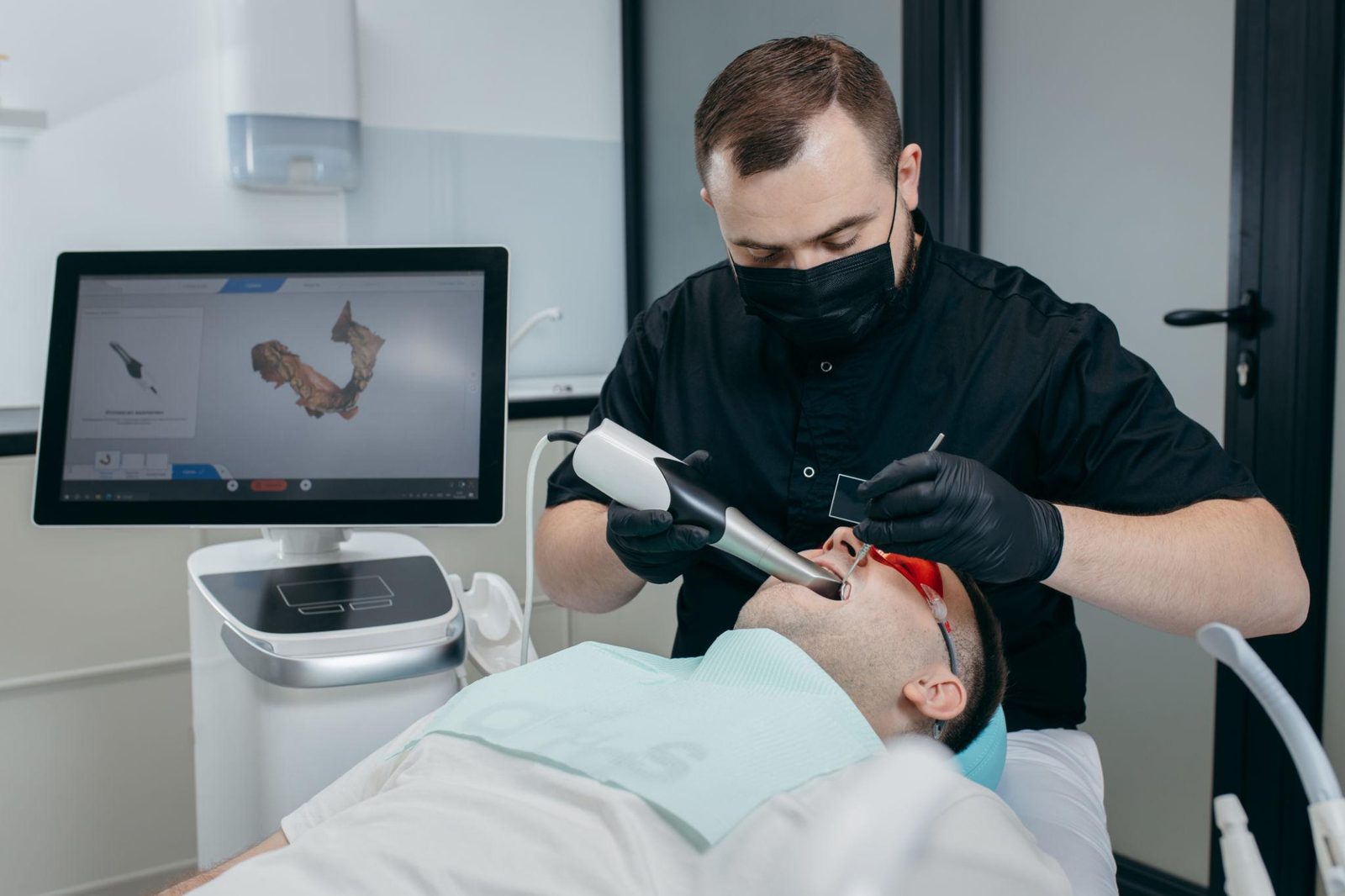
Traditional dental impressions involve placing a moulding material inside the mouth to record the shape of the teeth and gums. Digital intraoral scanners provide another method by capturing detailed images of oral structures.
A handheld scanning device moves around the mouth and creates a digital representation of the teeth, gums and bite.
Benefits of Digital Scanning
Digital impressions can support treatment planning in several ways:
- They provide detailed records of tooth surfaces and gum contours.
- They allow clinicians to assess the relationship between upper and lower teeth.
- They can be shared electronically with dental laboratories.
- They may reduce the need for repeated physical impressions.
- They help with designing crowns and other implant-supported restorations.
The resulting digital model can be used alongside other diagnostic information to plan how the final replacement tooth should fit within the patient’s smile.
3. Computer-Guided Implant Planning Supports Precise Positioning
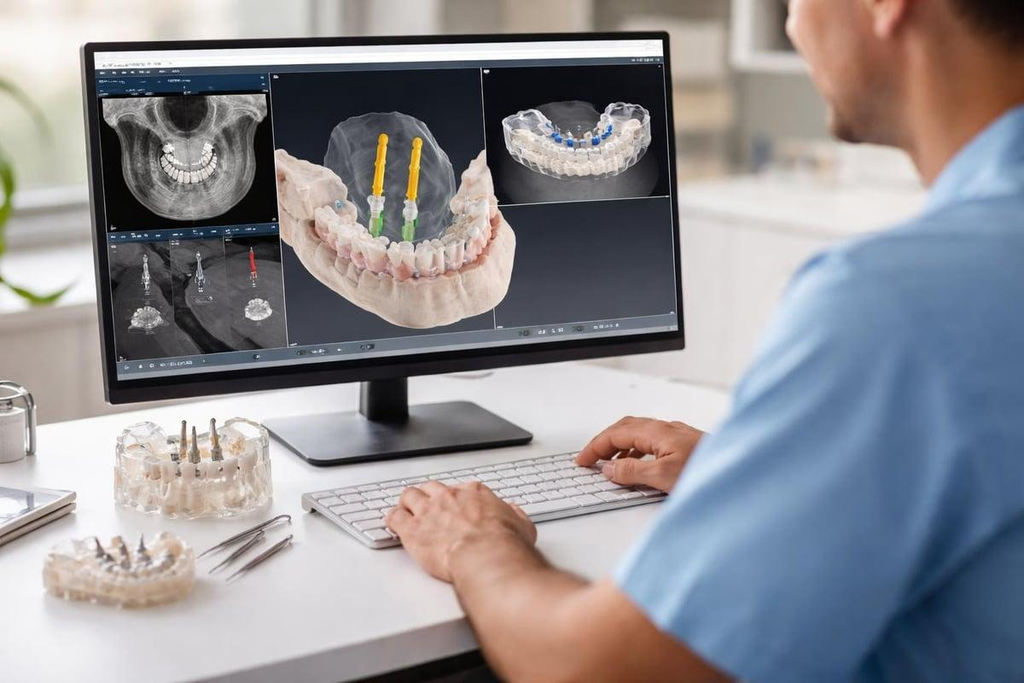
Computer-guided implant planning uses digital imaging and specialised software to help determine the proposed position, depth and angle of an implant.
The dental professional combines information from the CBCT scan with digital models of the teeth. This creates a more complete picture of the patient’s anatomy and restoration requirements.
Planning the Implant Position
The software allows clinicians to examine the proposed implant placement from different directions. They can consider bone availability, nearby structures and the position required for the final crown or bridge.
In suitable cases, a surgical guide may be produced using digital manufacturing technology. This guide fits over the teeth or gums and helps transfer the planned implant position to the surgical procedure.
Guided surgery can improve the consistency of implant placement in selected cases, although it does not eliminate surgical risks or guarantee a particular outcome. The dentist must still assess the site during surgery and adapt the approach when necessary.
4. Digital Smile Design Helps Plan the Final Appearance
Dental implant treatment should restore function while also considering the appearance of the replacement teeth. Digital smile design tools can help clinicians and patients visualise possible restoration shapes and positions before treatment begins.
These systems may use photographs, digital scans and measurements to assess:
- Tooth length and width.
- The relationship between the replacement tooth and neighbouring teeth.
- Smile symmetry.
- Gum contours.
- Overall facial and dental proportions.
This process can be particularly helpful when replacing front teeth, where small differences in shape, colour and positioning may be noticeable.
Digital visualisations are planning tools rather than guaranteed previews of the final result. The actual outcome depends on healing, gum response, available bone and the restoration materials selected.
5. CAD/CAM Technology Supports Custom Restoration Design
Computer-aided design and computer-aided manufacturing, commonly called CAD/CAM, are used to design and produce dental restorations.
After implant placement and the required healing period, digital records can help create a crown, bridge or other prosthetic component.
How CAD/CAM Works
The dentist or dental laboratory uses digital information to design the restoration. The design is then produced using specialised milling or manufacturing equipment.
This technology can support:
- Consistent measurements and restoration dimensions.
- Customised shapes that fit the planned bite.
- Efficient communication between clinicians and laboratories.
- Detailed adjustment of the restoration design.
The final restoration still requires clinical checks to confirm that it fits properly and does not place excessive pressure on the implant.
6. Digital Records Improve Communication and Treatment Coordination
Dental implant treatment may involve several stages and, in some cases, multiple dental professionals. Digital records make it easier to organise diagnostic information and communicate treatment requirements.
For example, a dentist may share scans, photographs and digital impressions with a specialist or dental laboratory. This can help different professionals work from consistent information.
Digital records can also make it easier to compare changes during treatment. Follow-up scans and clinical photographs may help document healing and assess the condition of the surrounding tissues.
However, digital communication must be supported by appropriate clinical examinations. Images alone cannot replace an assessment of gum health, implant stability or patient symptoms.
7. Technology Helps Identify Potential Treatment Challenges
Modern diagnostic tools can reveal issues that may influence implant suitability before surgery is scheduled.
For example, imaging may show insufficient bone volume, an unfavourable nerve position or limited space between neighbouring teeth. Digital models may also identify bite-related concerns that need attention.
Depending on the findings, the dental professional may recommend:
- Bone grafting to improve available bone volume.
- Treatment for gum disease.
- Tooth extraction before implant placement.
- A different implant size or position.
- An alternative restoration design.
- A different tooth replacement option altogether.
Identifying these considerations early can help create a realistic treatment plan and reduce the likelihood of unexpected changes during the procedure.
8. Personalised Planning for Different Implant Treatments
Not every patient requires the same implant arrangement. Modern technology allows treatment planning to be adapted to the number and location of missing teeth.
Single-Tooth Replacement
For one missing tooth, digital scans and imaging can help determine the implant position and design of the supporting crown.
Multiple Missing Teeth
When several teeth are missing, planning must consider how implants will distribute chewing forces and support a bridge or other restoration.
Full-Arch Implant Treatment
Patients missing most or all teeth in an arch may require a more extensive assessment. Three-dimensional imaging and digital planning can help evaluate bone availability and determine suitable implant positions for a full-arch restoration.
The most appropriate option depends on the patient’s anatomy, oral health and functional requirements.
Are There Limitations to Digital Dental Technology?
Although modern technology offers useful advantages, it has limitations. Imaging quality can vary, digital measurements must be interpreted correctly, and software recommendations do not replace professional judgement.
CBCT scans also involve radiation exposure, so they should be prescribed only when clinically appropriate. Digital guides may improve planning consistency, but they cannot account for every change that may occur during surgery.
Patients should ask why a particular scan or digital procedure is recommended and how the information will influence their treatment.
Conclusion
Modern dental technology has improved implant treatment planning through three-dimensional imaging, digital impressions, computer-guided positioning and custom restoration design. These tools help dental professionals examine oral structures, evaluate potential challenges and develop treatment plans based on individual needs.
Patients considering teeth implants in Dallas TX can ask their dental professional which technologies are appropriate for their case and how these tools will support each stage of treatment. A combination of accurate diagnostics, clinical experience and ongoing aftercare remains essential for achieving a functional and well-maintained implant restoration.